Jonesborough, Tennessee
Water Filtration & Testing in
Jonesborough, TN
Jonesborough draws its drinking water from the Nolichucky River. It meets every federal standard. It also has some of the highest disinfection byproduct levels we see in the region. With recent watershed conversations in the news, more Jonesborough homeowners are asking a simple question: what’s actually in my water right now?
What’s actually in
Jonesborough’s tap water
Jonesborough’s drinking water comes from a single source: the Nolichucky River. According to the EWG Tap Water Database, the Jonesborough Water Department’s most recent testing found 8 contaminants that exceed EWG’s health guidelines, with 16 total contaminants detected. The water is legal. That doesn’t mean there’s nothing worth knowing about.
The Nolichucky is a 115-mile mountain river. It starts in western North Carolina where the Cane River and North Toe River come together near the Blue Ridge, then flows westward through the gorge and into Washington County. It’s a beautiful river. It’s also a complicated one. Depending on rainfall or snowmelt in the North Carolina mountains, the river can go from clear to sediment-heavy within minutes. The treatment plant on Arnold Road runs 24 hours a day, 7 days a week, adjusting to whatever the river brings.
Jonesborough’s treatment plant uses a MIOX mixed oxidant disinfection system instead of chlorine gas. That’s actually a step up from what many Tri-Cities utilities use. MIOX is safer to handle and generally produces fewer taste and odor issues than chlorine gas. But when any disinfectant reacts with organic matter in the source water, it creates byproducts. The result shows up in the testing data.
Here are numbers on the top 7 contaminants, pulled directly from EWG’s report on Jonesborough Water Department:
Chromium (hexavalent)
Unlike the disinfection byproducts below, this one isn't a treatment byproduct. It occurs naturally and through industrial processes.
Chloroform
Above state (17.7) and national (16.2) averages.
TTHMs
Total Trihalomethanes
HAA5
Haloacetic Acids
HAA9
Haloacetic Acids
Trichloroacetic Acid
~2x the national average.
Dichloroacetic Acid
The legal limits for many of these contaminants haven’t been updated in almost 20 years. That gap between “legal” and “healthy” is exactly why we test.
Here’s something most people don’t think about: you absorb more contaminants in a ten-minute shower than you do drinking water all day.
Disinfection byproducts like the ones in Jonesborough’s water are volatile compounds. When the water heats up, they turn into gas. You breathe them in while you shower. You absorb them through your skin while you soak in the tub. The Nolichucky’s high organic load is part of why Jonesborough’s DBP levels run above state and national averages, and it’s also why a filter on your kitchen faucet only solves a fraction of the problem.
If you’re on a private well, the equation is different but the principle is the same. Well water doesn’t have disinfection byproducts (because it’s not disinfected), but it can carry bacteria, nitrates, and minerals that you’re absorbing every time you use the water, not just when you drink it. The only way to know what’s in your well water is to test it.
For town water and well water alike, a whole-home system is what addresses exposure at every point of contact. EWG recommends whole-home activated carbon and reverse osmosis for the contaminants present in Jonesborough’s municipal water.
It is such a relief to know there are not any impurities in our water such as fluoride, bacteria, viruses, pharmaceuticals, and more. We would recommend this company to anyone and everyone we know. You will either pay for your health now or later.
Thomas Grantham
Google ReviewOne contaminant worth noting separately: chromium-6, also known as hexavalent chromium. There’s no federal legal limit for it. Jonesborough’s detected level exceeds the EWG health guideline, which is based on California’s public health goal for cancer risk. It can occur naturally in the region’s geology or from industrial sources. A whole-home carbon system won’t remove it on its own, but a reverse osmosis system at the kitchen sink will.
Why are Jonesborough residents
thinking about their water right now?
If you live in Jonesborough or surrounding Washington County, you’ve probably been following the conversation about the BWXT facility expansion. Whether you support it, oppose it, or haven’t made up your mind, one thing is worth doing regardless: knowing what’s in your water right now.
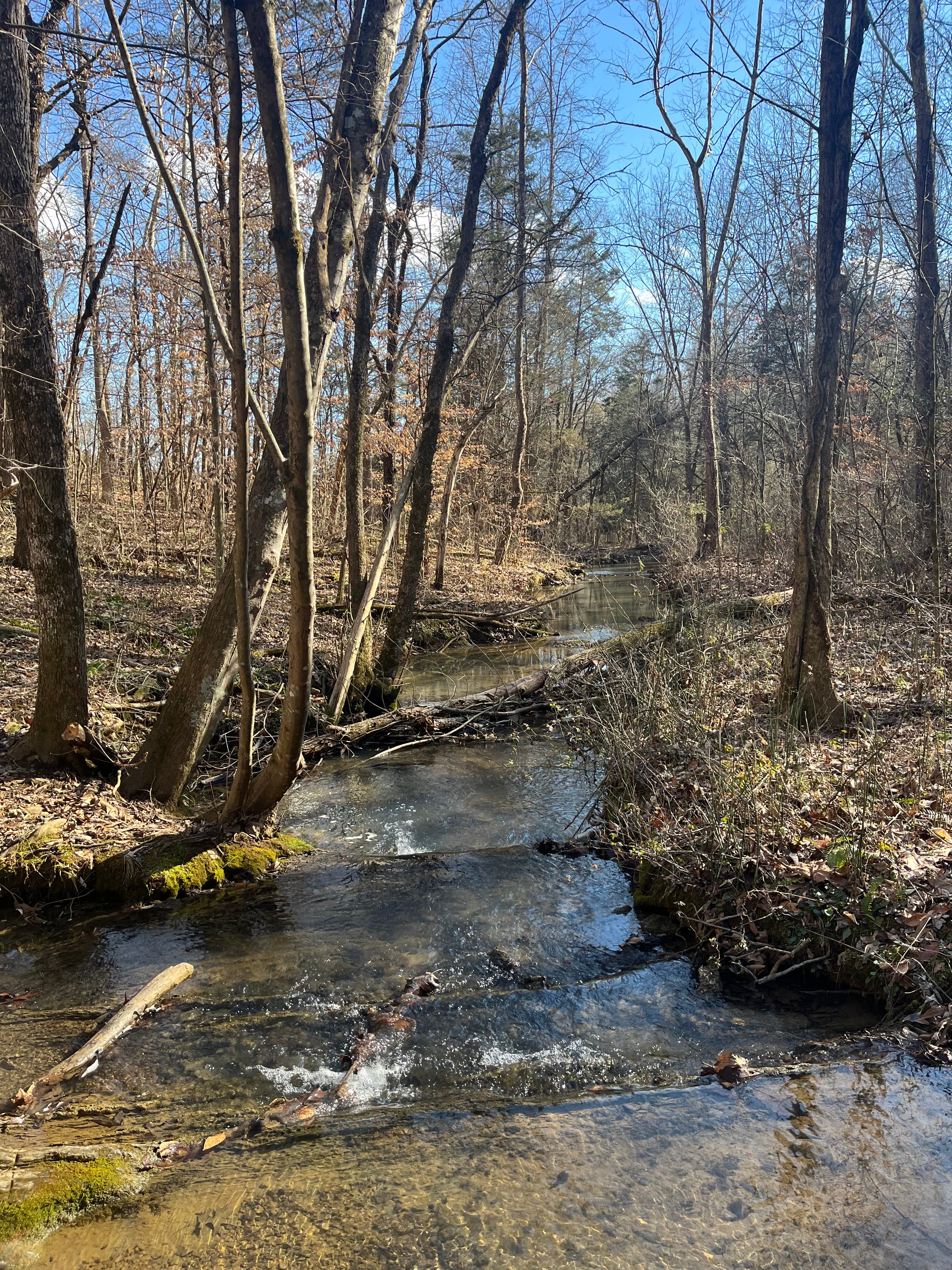
Here’s what we know from public reporting. The BWXT facility sits on property that includes Little Limestone Creek, which flows into the Nolichucky River, the same river that supplies Jonesborough’s drinking water. Community groups and neighboring property owners have raised questions about what the expansion means for the watershed, particularly around stormwater management, wastewater discharge, and long-term monitoring.
The facility currently discharges batch-treated process wastewater into Little Limestone Creek under existing state permits. BWXT has stated that the new process will not add to the existing water discharge, and that new waste will be solidified and shipped out of state. Community members have asked for independent water monitoring data and third-party environmental audits. As of early 2026, some of those questions remain unanswered publicly.
We’re not environmental regulators, and we’re not going to tell you what to think about the expansion. That’s not our job. Our job is water.
Most of the time, people get their water tested because they noticed something: a smell, a stain, dry skin, a new baby on the way. In Jonesborough right now, there’s another reason. A lot of people have realized they don’t actually know what’s in their water today. And if you don’t know what “today” looks like, you won’t have anything to compare against tomorrow.
The baseline
If you’re concerned about what might change in your water over the coming years, the single most useful thing you can do right now is establish a baseline. Get your water tested while you know what “normal” looks like. Keep the results. If contaminant levels change over time (for any reason), you’ll have the data to see it. That’s true whether you’re on town water or a private well, and it’s especially important for well water homes near the facility, where there’s no municipal treatment between the ground and your glass.
Whether anything changes or not, you’ll have peace of mind. And if it does change, you’ll have proof.
What Jonesborough residents
are asking us
It meets federal EPA standards and scored 99 out of 100 on its state rating. But the EWG Tap Water Database shows 8 contaminants above health-based guidelines that are stricter than the legal limits. The better question is: does it meet the standard you want for your family?
The Nolichucky carries a lot of organic material from its mountain watershed. When the MIOX disinfection system reacts with that organic matter, it creates byproducts like trihalomethanes and haloacetic acids. More organic matter in the source water means more byproducts in the treated water.
Private wells don’t go through the treatment plant, which means no disinfection byproducts but also no disinfection at all. Well water can carry bacteria, nitrates, minerals, and in some areas, contaminants from nearby industrial or agricultural activity. The only way to know is to test it.
Yes. Activated carbon filtration reduces trihalomethanes, haloacetic acids, and chloroform. Reverse osmosis removes those plus chromium (hexavalent) and nitrates. The right system depends on your specific test results.
How we work
in Jonesborough
Mountain View Pure Water & Air has been serving families in Jonesborough and across Washington County since 2016. We’ve installed water filtration, softening, and reverse osmosis systems in homes throughout the area, from historic neighborhoods near Main Street to newer developments along the 11E corridor and rural properties on well water throughout the county.
We test your water, show you what we find, and let you decide. We install Hague Quality Water systems, backed by 25-year warranties and serviced by our local team for the life of the system, and we’re still servicing systems we installed in our first year of business.
Some of the homes here are among the oldest in the Tri-Cities. Older homes often mean older plumbing, which can mean additional exposure to lead, copper, and other metals that leach from aging pipes and fixtures. A water test catches that too.
What kind of filtration system does a
Jonesborough home actually need?
It depends on what’s in your water and whether you’re on town water or a private well. The short version:
Whole-Home Carbon
Activated carbon reduces trihalomethanes, haloacetic acids, and chloroform across the whole house. Addresses Jonesborough’s disinfection byproducts at every tap and showerhead, not just the kitchen sink.
Learn about whole-home filtration →Reverse Osmosis
For the highest-grade drinking water at your kitchen sink. RO catches what a carbon filter can’t, including hexavalent chromium and nitrates, both of which matter for Jonesborough homes on town water or well water.
Learn about reverse osmosis →Water Softener
For hardness, appliance protection, and everything downstream of your water heater. Washington County sits on the same limestone geology as the rest of the Tri-Cities, and softening usually pays for itself in appliance lifespan. Our expense calculator can show you the actual number for your household.
Learn about water softening →We install Hague Quality Water systems, backed by 25-year warranties and serviced by our local team for the life of the system. The right combination of systems depends on what your test shows, which is why we test before we recommend anything.
FAQ
From the Nolichucky River. The water is treated at the town’s plant off Arnold Road using charcoal filtration and MIOX mixed oxidant disinfection, and serves over 14,000 customers across Jonesborough and surrounding Washington County.
We come to your home, test at your kitchen sink, and walk you through the results. About 30 minutes, no cost, no obligation.
On town water: when you move in, after plumbing work, or when you notice changes. On well water: at least once a year. Given the current watershed conversations in Washington County, establishing a baseline now is a practical step for any homeowner.
Yes. The Town of Jonesborough publishes an annual Consumer Confidence Report through the town’s website. For contaminant levels compared to health guidelines (not just legal limits), check the EWG Tap Water Database entry for Jonesborough.
Why Jonesborough families choose Mountain View
We live here. Our installs, our service after the sale, our team: all local. We’ve been testing water in Jonesborough kitchens, well houses, and along rural Washington County roads since 2016. We’ve been serving Jonesborough and Washington County since 2016. If you need us in a decade, we’ll still be here. If you’re on Johnson City water, Kingsport water, Bristol water, or well water out past town, we’ll come to you, test it on your kitchen counter, and tell you exactly what’s in it.


Schedule your free
water test
Just the data and a conversation. We’ll come to your home anywhere in Jonesborough, Telford, Limestone, or anywhere in Washington County, run the test on your kitchen counter, and tell you what we find.