Kingsport, Tennessee
Water Filtration in
Kingsport, TN
Kingsport’s tap water meets every federal standard. It also has some of the highest disinfection byproduct levels in the Tri-Cities, trace industrial contaminants that don’t show up in neighboring towns, and the hard water you’d expect from limestone bedrock. We can show you exactly what that means for your home.
What’s actually in
Kingsport’s tap water
According to the EWG Tap Water Database, nine contaminants in Kingsport’s water exceed the Environmental Working Group’s health-based guidelines. The numbers come from the testing the city itself reports to the state of Tennessee. The biggest gaps are in disinfection byproducts: chemicals that form when chlorine reacts with natural organic matter in surface water. Every chlorinated municipal system in America has them. Kingsport has substantially more than its neighbors do.

Here are numbers on the top 6 contaminants, pulled directly from EWG’s report on Kingsport Water Department:
TTHMs
Total Trihalomethanes
HAA9
Haloacetic Acids
Chloroform
Trichloroacetic Acid
PFOS
PFAS / Forever Chemicals
Lithium
These contaminants fall under the EPA’s federal legal limit — but federal standards haven’t been updated in almost 20 years. EWG’s health guidelines reflect current cancer-risk research.
Kingsport’s HAA9 level is over three times what we see in Johnson City’s water and the highest of any major Tri-Cities utility.
None of that means the city is doing anything wrong. They’re meeting every federal requirement they’re held to. It does mean that if you’re drinking, cooking with, and bathing in Kingsport tap water, you’re being exposed to these contaminants at substantially higher levels than people thirty minutes down the road.
Why this matters
for your family
Here’s the part that usually gets skipped. “Cancer risk” is easy to say and hard to feel. So let’s be specific about what the research actually shows.
Trihalomethanes and haloacetic acids are regulated by the EPA under the Stage 2 Disinfectants and Disinfection Byproducts Rule because decades of epidemiological studies have linked long-term exposure to an increased risk of bladder and colorectal cancer. A 2024 meta-analysis of 29 epidemiological studies, reviewed in the National Institutes of Health’s PubMed Central, concluded that current federal limits on disinfection byproducts don’t go far enough to protect public health. A separate meta-analysis found that high THM exposure increases bladder cancer risk by roughly 33 percent over a lifetime. The International Agency for Research on Cancer classifies chloroform, the most common trihalomethane, as possibly carcinogenic to humans.
Beyond cancer, peer-reviewed studies have associated chronic exposure to these compounds with pregnancy complications, including spontaneous miscarriage, low birth weight, and certain birth defects. The research is clearest for long-term exposure measured in years and decades, not weeks.
Most of your disinfection byproduct exposure doesn’t come from drinking the water. It comes from breathing it.
When you run a hot shower, these compounds vaporize and you absorb them through your lungs and through your skin. A ten-minute shower in water with Kingsport’s TTHM levels gives you more exposure than drinking the same water all day. That’s why a pitcher filter on your kitchen counter, no matter how good it is, doesn’t address the problem for your family. A pitcher filter protects one glass. A whole-home carbon filter protects the shower, the bath, the laundry, and every tap in the house.
The other thing in
Kingsport’s water
Kingsport has been an industrial town for over a century. Eastman Chemical is headquartered downtown and has been part of the city’s identity since before World War II. The company is a big part of why Kingsport is what it is today. It’s also part of the water story, in a measurable way.
EWG’s database shows that Kingsport’s drinking water contains trace levels of perfluorooctane sulfonate (PFOS), a member of the family of “forever chemicals” the EPA began federally regulating for the first time in 2024. Kingsport’s level is 0.492 parts per trillion, below the proposed federal legal limit of 4 ppt and above EWG’s health-based guideline of 0.3 ppt. The water also shows measurable lithium at 12.1 ppb, more than twenty times the Tennessee state average. Both are industrial-source contaminants. Neither appears at these levels in the tap water of nearby non-industrial cities.
The city’s drinking water leaves the treatment plant in compliance with every federal standard, and the intake is geographically positioned to be largely protected by the TVA dam system upstream. But the contaminant profile reflects the kind of place Kingsport is.
The hard water problem
There’s one more thing in Kingsport’s water that isn’t a contaminant, isn’t regulated, isn’t going to give anyone cancer, and still costs Kingsport families real money every single year. It’s the dissolved calcium and magnesium, and it comes from the limestone.
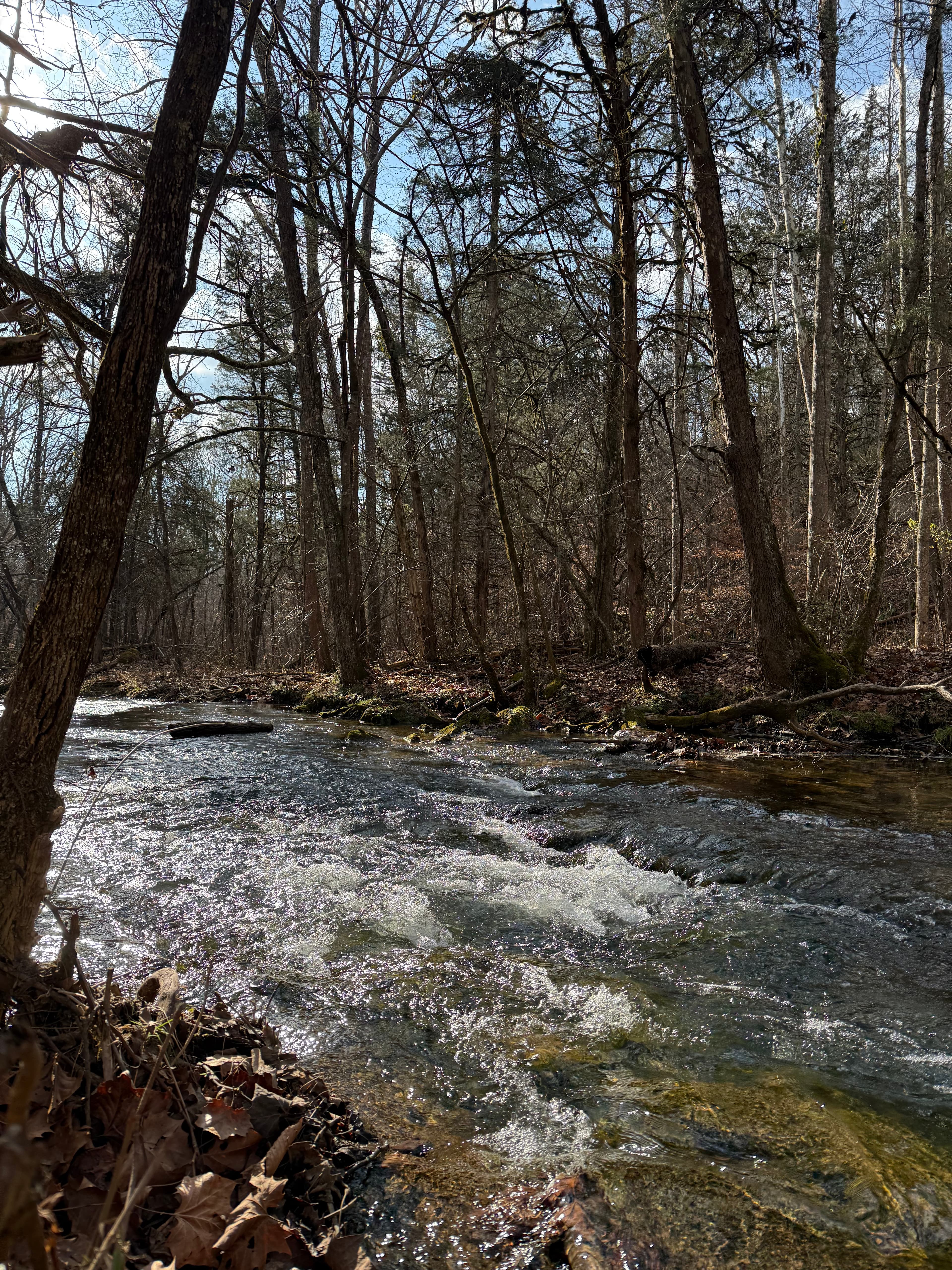
Northeast Tennessee sits on a deep layer of limestone bedrock. Water flowing through that kind of geology, whether it’s a river like the South Fork Holston or the groundwater feeding your well, dissolves calcium and magnesium along the way. By the time it reaches your tap, it’s what the USGS classifies as hard or very hard water. That’s true everywhere in the Tri-Cities, not just Kingsport. It’s a regional feature, not a treatment issue.
The minerals themselves are harmless to drink. The problem is what they do to everything your water touches on the way to you and on the way through your house. Calcium and magnesium come out of solution as soon as water heats up or sits still, forming a crust called scale. Scale builds up on the inside of your water heater, inside your dishwasher, inside your washing machine, on your showerheads, and inside the pipes in your walls. You usually can’t see it until something breaks.
Battelle Memorial Institute Study, 2009
Commissioned by the Water Quality Research Foundation
48%
efficiency loss in water heaters on hard water over 15 years
1.6 yrs
time to failure for some tankless units on 26 gpg hard water
30-50%
shorter lifespans for dishwashers and washers on hard water
75%
flow rate lost in showerheads within 18 months
Put it together for an average household and you’re looking at several hundred dollars a year in direct costs you probably don’t notice because they’re distributed across a utility bill, a detergent bill, and appliance replacements that feel random. Over a decade, it adds up to real money, and most of it could have been avoided with a water softener that costs a fraction of one appliance replacement.
If you have hard water, you know it. You see it in white crust on the kettle, the spotted glasses coming out of the dishwasher, and the hair that feels different after a shower. But what you may not realize is how much it is actually costing you.
Want to see what your household is actually spending? Our expense calculator walks you through the math in about three minutes.
The water softening and reverse osmosis products sold are ridiculously impressive. My skin, hair, and laundry have changed for the better in only a week.
Lisa Luster
Google ReviewHow does our Kingsport water
testing process work?
We’ve been doing this long enough that the process is the process.
You schedule a free water test. We come to your house, run the test on your kitchen counter, and show you what’s in your specific water, including the exact hardness in grains per gallon. Two homes on the same street can have different results depending on plumbing, age of pipes, and where you sit on the distribution system.
We do a comprehensive water test that shows you the whole picture about your water quality and how it is impacting your home and health. Click here to learn more about our process.
You decide if you want to do something about it. If you do, we’ll walk you through what kind of system actually fits your home and your budget. If you don’t, you’ve still got the test results and the knowledge. That’s yours to keep.
If you’ve been thinking about this for a while and just haven’t gotten around to it, this is the easiest first step there is. No commitment, no pressure, no obligation to do anything afterward.
What kind of filtration system does a
Kingsport home actually need?
It depends on your water and what you care about most. The short version:
Whole-Home Carbon
For chlorine, disinfection byproducts, and skin issues across the whole house. EWG specifically recommends activated carbon for the contaminants present in Kingsport’s water. Addresses DBPs at every tap and showerhead.
Learn about whole-home filtration →Reverse Osmosis
For the highest-grade drinking water at your kitchen sink. RO catches the things a carbon filter can’t, including PFOS and other trace industrial compounds.
Learn about reverse osmosis →Water Softener
For hardness, appliance protection, and everything downstream of your water heater. Usually the single biggest quality-of-life improvement people notice in the first month.
Learn about water softening →Most Kingsport homes we work with end up with all three in some combination, because each solves a different problem. The right combination depends on what your test shows. We’ve tested over a thousand homes across the Tri-Cities. We don’t skip that step.
We install Hague Quality Water systems, backed by 25-year warranties and serviced by our local team for the life of the system.
What Kingsport residents ask us
Kingsport draws its water from the South Fork of the Holston River. The city’s intake is located about one mile below Patrick Henry Dam and a half-mile above where the John B. Dennis Highway crosses the river. Raw water travels through a tunnel under the highway to the treatment plant, then gets distributed through 22 storage tanks across the city. On any given day, roughly 840 million gallons flow past the intake; the city pulls about 16 million.
Kingsport’s water meets every federal EPA standard and also contains nine contaminants that exceed EWG’s stricter health-based guidelines, at higher levels than most neighboring Tri-Cities utilities. Whether the gap matters to your family is a personal decision. Most of the Kingsport families we work with decide it does.
Kingsport’s water has substantially higher levels of disinfection byproducts. EWG’s data shows Kingsport’s HAA9 at 51.4 ppb compared to Johnson City’s 16.5 ppb, and Kingsport’s TTHMs at 42.9 ppb compared to Johnson City’s 26.5 ppb. Kingsport also has detectable PFOS and elevated lithium that don’t appear at the same levels in neighboring cities. The reasons relate to source-water chemistry, treatment process, and the industrial character of the area.
Kingsport’s water falls in the hard to very hard range on the USGS hardness scale. The Kingsport Water Department publishes an annual Consumer Confidence Report with the specific hardness value, and we measure it directly during the free in-home water test so you know the exact number for your house. Hardness can vary by a grain or two depending on where you are on the distribution system and whether your home has any pre-existing treatment.
The city’s intake is geographically positioned upstream of Eastman’s main industrial campus and is buffered by the TVA dam system, which means Eastman’s discharges into the South Fork Holston enter the river downstream of where Kingsport draws drinking water. That said, Kingsport’s water does show trace levels of industrial contaminants like PFOS, which is consistent with the broader industrial character of the area. The drinking water leaves the treatment plant in compliance with every federal standard. Whole-home filtration is the addressable response if you want to remove the contaminants the city isn’t required to remove.
It varies based on your home, your water, and the kind of system that fits. We don’t quote a price until we’ve actually tested your water and seen your setup, because anything else is a guess. The free water test is the starting point, and there’s no obligation after.
Yes. We’ve installed systems throughout Kingsport, including downtown, Colonial Heights, Lynn Garden, the Rotherwood and Allandale areas, and the surrounding Sullivan County area.
Why Kingsport families choose Mountain View
We live here. Our installs, our service after the sale, our team: all local. Four out of five families who bought a system from us in our early years are still Mountain View customers. That’s not a tagline. It’s from our service records. We’ve spent ten years testing water on Kingsport kitchen counters, and we know what shows up in this water specifically. When you’re ready, we’ll come show you what’s in yours.


Schedule your free
water test
Just the data and a conversation. We’ll come to your home anywhere in Kingsport, including Colonial Heights, Lynn Garden, Rotherwood, Allandale, or anywhere in the Tri-Cities, run the test on your kitchen counter, and tell you what we find.