One of the most common conversations that comes up during in-home water tests is something like this: the customer started looking into their water because of a specific complaint — dry skin that no amount of lotion seemed to fix, hair that felt dull and stiff no matter what products they used, dishes coming out of the dishwasher with white spots even right after a wash. They had attributed these things to their skin type, their hair type, their dishwasher.
The water test tells a different story.
Water quality does not stop at the kitchen tap. It affects every surface it touches in your home — your skin, your hair, your appliances, your plumbing, your budget.
Hard Water and Your Skin
Hard water contains elevated levels of dissolved calcium and magnesium. When hard water evaporates on your skin after a shower, it leaves a mineral residue that can disrupt the skin's natural moisture barrier. The result is dryness, tightness, and for some people, irritation that persists regardless of how much moisturizer they apply.
The research on this is more than anecdotal. A 2021 systematic review and meta-analysis published in Clinical and Experimental Allergy found a statistically significant association between living in hard water areas and higher rates of atopic eczema, particularly in children. The proposed mechanism is consistent with what many dermatologists have observed: hard water minerals interfere with the skin barrier, increasing susceptibility to irritation and moisture loss.
This does not mean hard water causes eczema in every case. It means the correlation is significant enough to be worth understanding if skin issues are a persistent concern in your household — especially for children, whose skin barrier is more sensitive.
Hard Water and Your Hair
The same mineral buildup that affects your skin affects your hair. Calcium and magnesium coat the hair shaft, making it harder for moisture to penetrate, leaving hair feeling coarser, looking duller, and more prone to breakage over time. Professional salons have long preferred conditioned water because they know what minerals do to a service.
What most people notice within the first week or two of switching to softened water: they need significantly less shampoo and conditioner to achieve the same result, and their hair feels cleaner after washing. The mineral coating that was absorbing product is gone.
What Hard Water Does to Your Appliances
Hard water damage to appliances rarely shows up until something breaks.
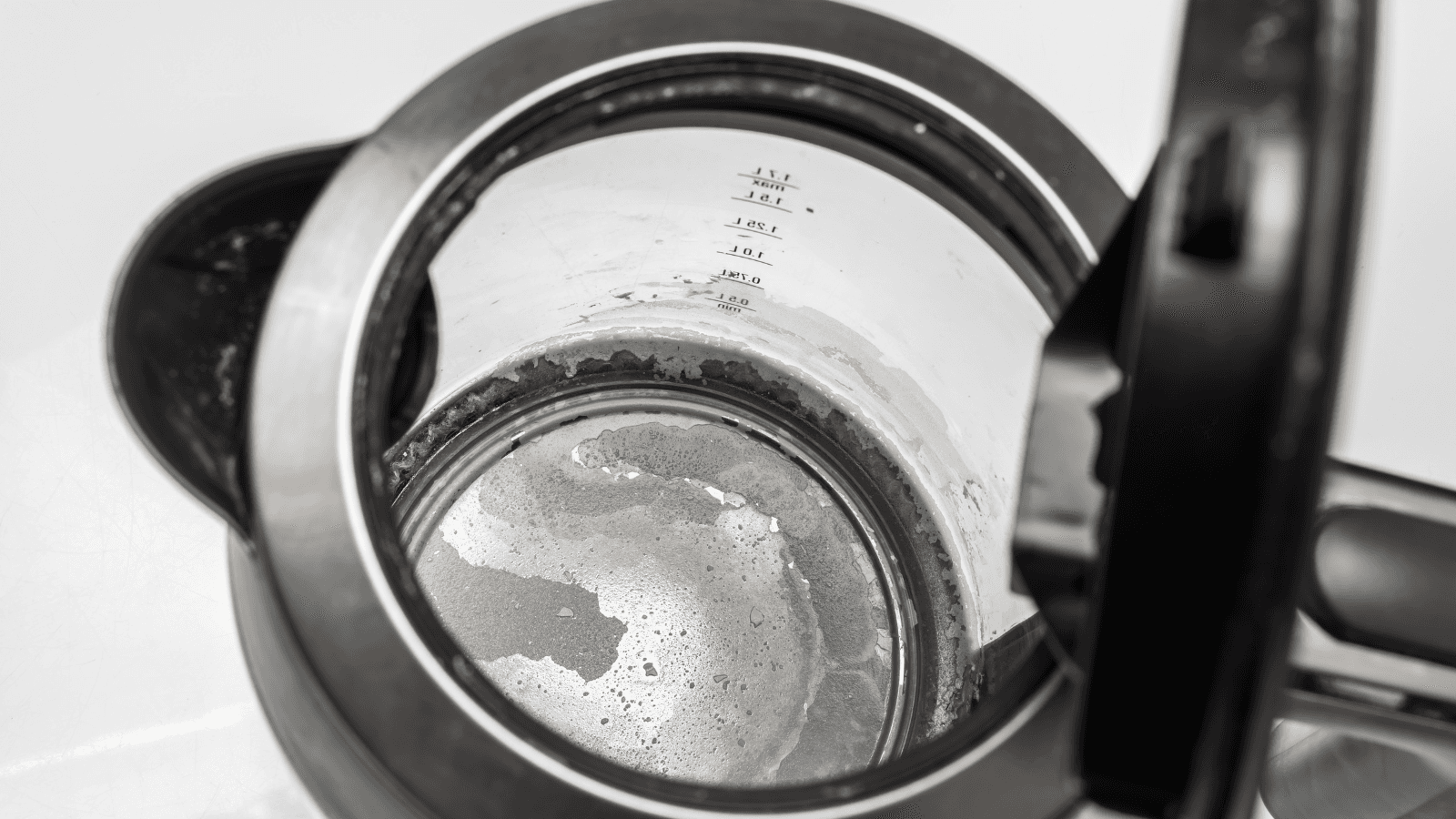
Hard water leaves scale deposits wherever it heats or evaporates. Inside your water heater, that scale builds up on heating elements and tank surfaces, reducing efficiency and eventually contributing to premature failure. A DOE-commissioned study from Pacific Northwest National Laboratory found that tankless gas water heaters operating on hard water lost roughly 10 percent of their efficiency within the equivalent of two years of use. That inefficiency shows up on your energy bill, quietly, every month.
The same scale accumulates in dishwasher spray arms, washing machine heating elements, coffee maker internal components, and shower heads. None of this shows up as a single repair bill with "hard water damage" on the invoice. It shows up as appliances that work less efficiently over time and fail earlier than they should.
Chlorine in the Shower
Here is something worth knowing even if your water is not especially hard: chlorine in your shower is not just a taste and odor issue.
When you shower in chlorinated water, you are inhaling steam that contains chlorine and, depending on your water supply, disinfection byproducts formed when chlorine reacted with organic matter in the source water. Research on dermal exposure during showering suggests that shower inhalation and skin absorption can be a meaningful pathway for chlorine and TTHM exposure — in some studies, rivaling oral ingestion for certain compounds. Hot showers concentrate these compounds in steam more effectively than cold water.
For families on municipal water in this region — where disinfection byproducts consistently show up above EWG health guidelines — whole-house carbon filtration addresses this exposure pathway across every tap and shower in the home.
The Budget Math
Some of what hard water costs is easy to quantify. Families who switch from buying bottled water to using an RO system typically save $600 to $2,000 per year. The reduction in soap, shampoo, conditioner, cleaning product, and detergent use that comes with softened water adds another few hundred dollars annually for most households.
The appliance costs are harder to pin down because they spread across years and disguise themselves as normal wear and tear. But the pattern is real: homes with untreated hard water replace water heaters, dishwashers, and washing machines sooner. The DOE data on water heater efficiency loss represents money leaving through your energy bill every month long before the water heater needs replacing.
What the Test Tells You
Every in-home water test includes a hardness reading. Hardness is measured in grains per gallon (gpg) or parts per million (ppm). Soft water is generally considered under 3.5 gpg. Moderate is 3.5 to 7. Hard is 7 to 10.5. Very hard is above 10.5 gpg.
Most homes in northeast Tennessee, whether on city water or a private well, run in the moderate to hard range at minimum. The specific level determines which treatment approach makes the most sense — and whether the priority is softening, conditioning, or addressing other contaminants first.
Mountain View Pure Water and Air offers free in-home water testing throughout the Tri-Cities and the surrounding region. We test in front of you, explain every result, and give you an honest read on what, if anything, makes sense to address. Schedule at mvpwater.net or call 423-218-9361.