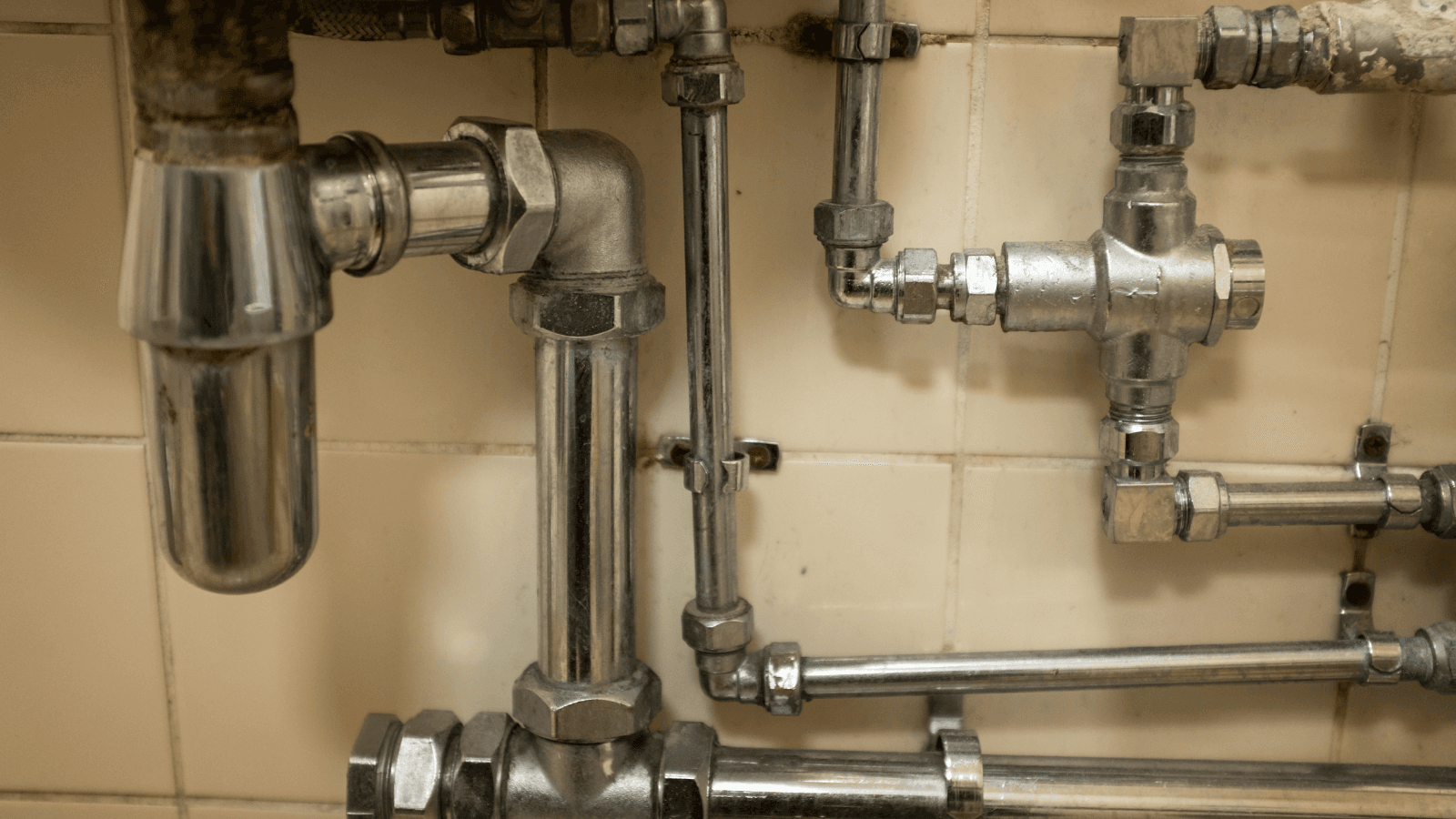
Your plumbing is the part of your house in constant contact with your water, every hour of every day, for as long as you own the place. So whatever is in that water, good or bad, your pipes and your water heater are living with it full time. Most of what water quality does to plumbing happens slowly and invisibly, which is exactly why people don't catch it until it's expensive.
Three things in your water quietly decide how long your plumbing lasts: hardness, pH, and sediment. Here's what each one is doing while you're not looking.
Hardness: the slow concrete
Hard water carries dissolved calcium and magnesium, and when water heats up, those minerals come out of solution and cement themselves to metal as scale. In a water heater, that means a growing mineral layer on the elements and the tank bottom, roughly a pound a year on untreated hard water (Source: Water Quality Research Foundation).
Picture the timeline. Year five, your heater is working noticeably harder to push heat through a scale blanket, and since water heating is already about 17 percent of your energy bill, you're paying for the privilege (Source: U.S. Department of Energy). Year ten, efficiency is down and the rumbling sound is water trying to boil under mineral crust. On very hard water, tankless units have failed in as little as a year and a half (Source: WQRF). We get into the appliance side of this in our post on the signs of hard water; here the point is what it does to the plumbing system itself.
pH: the quiet corrosion
This one surprises people. Water that's too acidic, meaning a low pH, slowly eats metal pipes from the inside.
The EPA recommends drinking water sit between pH 6.5 and 8.5 (Source: U.S. EPA Secondary Standards). Below that range, water turns corrosive and starts leaching metal out of your plumbing: copper, and in older homes, lead solder and galvanized steel (Source: EPA Lead and Copper Rule). The tell is a blue-green stain in sinks and tubs. That color is dissolved copper, which means your water is corroding your pipes and carrying the evidence to your fixtures. Acidic water tends to show up in wells, and we see it in homes across the region sitting on the wrong geology for it.
Left alone, acidic water thins pipe walls over years until you get pinhole leaks, usually in a wall or under a slab where they do the most damage before you notice.
Sediment: the sandpaper
Sediment is the physical grit, sand, rust flakes, and fine particles that ride along in some supplies and a lot of well water. It scours valve seats, wears out fixture cartridges, settles in the water heater tank, and shortens the life of every appliance the water touches. It's the least dramatic of the three and still costs you fixtures and repairs over time.
What you can do about it
Start by knowing your water. Hardness, pH, and sediment are all measurable, and you can't fix what you haven't identified. Acidic water needs a neutralizer, not a softener. Scale calls for softening or conditioning. Sediment calls for filtration. Match the tool to the actual problem, which is why testing comes before buying anything.
Here's where we're built a little differently. We're the company in this area that can test your water and look at what it's been doing to your plumbing in the same visit, because we do both. Most water companies stop at the water. We follow it into the pipes. If you want one team that sees the whole picture, water and plumbing together, we'll come test for free and take a look. Call 423-218-9361 or book at mvpwater.net.