Kingsport, TN Water Quality: What the Data Shows
Kingsport has the most complicated water story in the Tri-Cities, and it's worth understanding rather than worrying about. The city draws its drinking water from the South Fork of the Holston River, treats it well, and meets every federal standard (Source: City of Kingsport Water Department). It also sits in a landscape shaped by a century of heavy industry, which raises real questions that deserve straight answers. Let's go through what the data actually shows.
Where Kingsport's water comes from
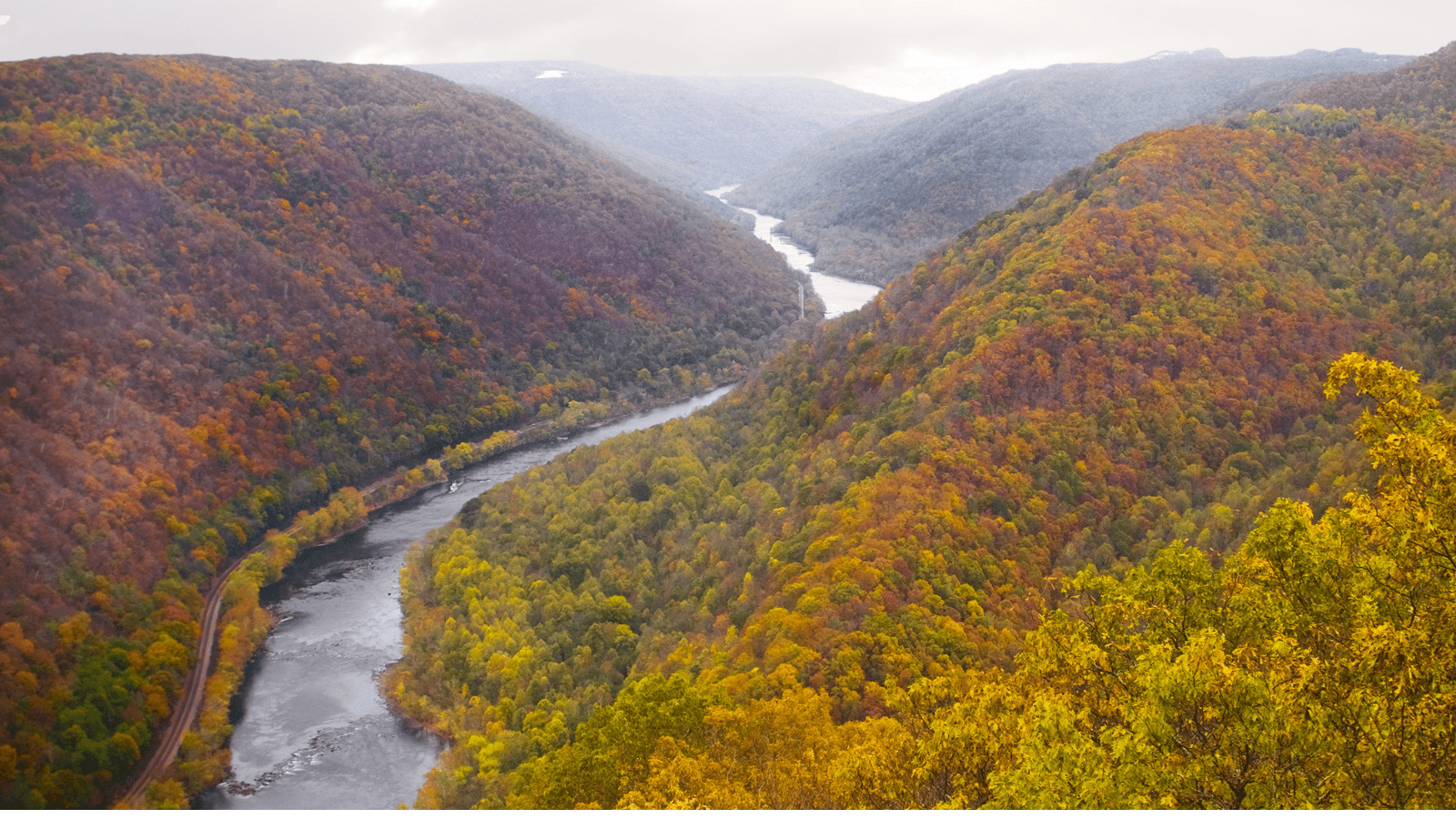
The Kingsport Water Department draws from the South Fork Holston River, pulling about 16 million gallons a day from an intake positioned roughly a mile below Patrick Henry Dam, and treats it to meet Safe Drinking Water Act standards with no maximum contaminant level violations on record (Source: City of Kingsport Water Department; EWG Tap Water Database). By the federal scorecard, the water passes. That's the baseline, and it's a good one.
But passing the federal standard and being free of everything you might care about aren't the same thing, and the honest reason is that federal limits haven't been fully updated in almost twenty years. So let's look at what Kingsport residents actually ask about, starting with the headline and then the things that matter more.
The PFAS question
PFAS, the so-called “forever chemicals,” are the reason Kingsport's water gets discussed most. Here's what the actual testing found.
In late 2023, the Sierra Club of Tennessee sampled surface water at twenty locations around Kingsport and Johnson City and found PFAS in 60 percent of samples, with the highest concentrations downstream of industrial sites (Source: Sierra Club TN PFAS Report, 2023). The single highest reading wasn't in Kingsport's city water. It was in the First Utility District of Hawkins County, a separate utility whose supply sits downriver from the Holston Army Ammunition Plant (Source: Sierra Club TN; Tennessee Lookout). If you're on Kingsport city water, that highest reading is not your utility.
In Kingsport's own drinking water, PFOS was detected at 0.492 parts per trillion, below the EPA's 4 ppt legal limit but above EWG's stricter health guideline of 0.3 ppt (Source: EWG Tap Water Database, Kingsport Water Dept). The city's intake is positioned upstream of Eastman Chemical's main campus and buffered by the TVA dam system, so those industrial discharges enter the river downstream of where Kingsport draws its water. The water also shows measurable lithium, another trace industrial-source contaminant. Both are real, both are small, and neither is the biggest thing in this water.
Why PFAS isn't the only thing in Kingsport's water
An additional story that can get clouded by the PFAS conversation is disinfection byproducts, and this is where Kingsport stands apart from its neighbors.
Disinfection byproducts form when chlorine reacts with natural organic matter in surface water. Every chlorinated city system in America has them, but Kingsport has substantially more than the towns around it. According to the EWG Tap Water Database, Kingsport's haloacetic acids run about three times higher than Johnson City's, and its trihalomethanes are higher too, the most of any major Tri-Cities utility (Source: EWG Tap Water Database, Kingsport Water Department). These are the contaminants the EPA regulates because decades of studies have linked long-term exposure to increased bladder and colorectal cancer risk. They're within the federal legal limit, but those limits haven't been meaningfully updated in almost twenty years.
And here's the part most people don't expect: most of your exposure to these compounds doesn't come from drinking the water. It comes from your shower. When water heats up, these byproducts vaporize, and you absorb them through your lungs and skin. A ten-minute hot shower can expose you to more than drinking the same water all day would. That's worth knowing, because it means a pitcher filter on the kitchen counter, however good, only ever protects one glass. It was never going to reach the shower, the bath, or the laundry.
The thing in Kingsport's water that costs you money
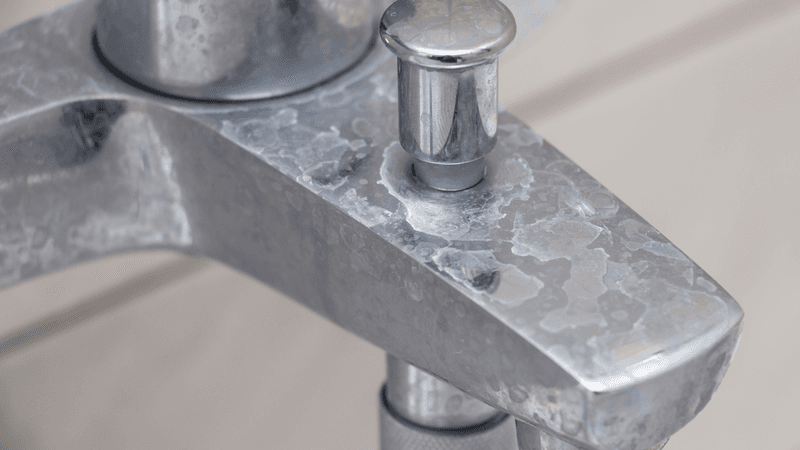
There's one more thing in Kingsport's water that will never show up in a cancer study and still costs local families real money every year: hard water. Northeast Tennessee sits on deep limestone, and water moving through that rock, whether it's the South Fork Holston or the groundwater in a well, dissolves calcium and magnesium the whole way to your tap (Source: USGS). The minerals are harmless to drink. The problem is what they do to everything the water touches: scale building up inside your water heater, your dishwasher, your washing machine, your showerheads, and the pipes in your walls, usually invisible until something breaks. Spread across a utility bill, a detergent bill, and appliances that wear out sooner than they should, it adds up to several hundred dollars a year that most people never trace back to their water. We cover how to spot it in our post on the signs of hard water.
So while PFAS is the headline, the fuller picture for a Kingsport homeowner is three separate things: elevated disinfection byproducts, trace industrial contaminants like PFOS, and hard water. They call for different responses, and no single filter on one faucet addresses all three. That's the real reason to think past any one contaminant and look at what's actually coming out of every tap in your house.
What this means for you
If you're on Kingsport city water, your water meets federal standards, and I don't want to talk anyone into fear they don't need. At the same time, “below the legal limit” and “below the health guideline” are two different bars. Some families, especially those with young children or pregnant members, reasonably choose to filter, and given the disinfection-byproduct levels, whole-home carbon filtration is the response that actually reaches the shower where most of the exposure happens. That's a personal call, and it should be an informed one, not a scared one.
If you're on a private well in Hawkins or Sullivan County, none of the city data applies to you, and given the regional findings, testing your own water is the only way to know where you stand.
How to know what's in your water
The city's annual report gives you the system average. It can't tell you what's coming out of your specific tap, in your neighborhood, in your home, and it says nothing about a private well. Two homes on the same street can test differently depending on plumbing and where they sit on the distribution system. That's the gap a real test fills. We'll test your Kingsport water for free and show you what's actually there, including your exact hardness in grains per gallon, so any decision you make is based on your water and not a headline. Having served over a thousand Tri-Cities families, we'd rather you know than wonder. Call 423-218-9361 or book at mvpwater.net.